Knanaya Christians
The Mesopotamian Time Capsule: Unlocking the Hyper-Endogamous Lock of the Knanaya Christians
If you attend a traditional wedding within the Knanaya Christian community of Kerala, you are stepping into a living, breathing historical epic. From the haunting rhythms of the Purathanapattukal (ancient songs) to the distinctive bridal Mylanchi (henna) and Chantham Charthal ceremonies, their traditions feel beautifully out of sync with the surrounding landscape. Known historically as the Southists (Thekkumbhagar) to distinguish them from the broader St. Thomas Syrian Christian (Northist) framework, this community has guarded its unique identity along the Malabar Coast with legendary fierce determination.
According to deep-seated oral and ecclesiastical chronicles, their lineage traces back to 345 AD. Led by the wealthy Mesopotamian merchant Thomas of Cana (Knai Thoma), a group of 72 Jewish-Christian families consisting of bishops, priests, and citizens migrated from Edessa (modern-day Iraq/Syria) to the port of Kodungallur.
Because of this profound historical anchor, popular cultural folklore insists on a rigid, absolute narrative: that the community has maintained 100% pure, unmixed Mesopotamian/Syriac bloodlines for nearly 1,700 years. To enforce this, they maintain one of the most uncompromising social rules on the subcontinent—if a member marries outside the community, they and their descendants are strictly excluded from the Knanaya church infrastructure.
But population genetics replaces the myth of absolute "purity" with something far more scientifically spectacular. When modern genomics reads the cellular manual written in your cells, the Knanaya genome emerges as a masterclass in sex-specific genetic containment. They are a pristine biological time capsule—a distinct Middle Eastern genetic island floating within a deep, ancient South Asian ocean.
Through Genomepatri Heritage, Mapmygenome strips away historical folklore to reveal the precise molecular timeline written in the Knanaya genome.
From Tigris banks to Malabar waves,
The covenant sealed, the gates barred tight,
The code remembers the ancient voyage.
Deconstructing the Myth: Absolute Purity vs. Genomic Reality
When high-resolution genomic scanners map the DNA of Knanaya families, the data provides an objective, empirical look at centuries of socio-religious containment.
| The Cultural Stereotype / Myth | The Genotypic Reality Uncovered by DNA |
| 100% Unmixed Foreign Purity: The traditional belief that the community contains zero subcontinental DNA and remains a pure Mesopotamian enclave. | A Pristine Hybrid Isolate: Autosomal DNA reveals a profound genetic reality: they possess a foundational, deep South Asian (ASI/ANI) baseline integrated with a highly stabilized West Asian core. |
| Identical to General Nasranis: The outside assumption that their biological footprint is indistinguishable from general Syrian Christians or other Malayali groups. | The Syriac Genetic Island: Because of severe, multi-generational endogamy, they form a highly distinct genetic cluster that sits completely separate from neighboring Kerala populations. |
| "Marital Exclusion is Just Social": The view that their strict out-marriage rules serve only as a cultural boundary with no biological consequences. | The Vault of Homozygosity: Nearly 1,700 years of strict internal endogamy have generated massive, continuous blocks of shared ancestral DNA, locking their ancient proportions in place. |
The Three Pillars of the Knanaya Genomic Matrix
The historical journey of the Knanaya is an anthropological marvel. When we look through a high-resolution molecular lens, their genome unfolds into three distinct evolutionary layers:
1. The Mesopotamian/Syriac Anchor
When geneticists trace the ancestral components of Knanaya DNA, the oral tradition of Knai Thoma is powerfully validated. Their autosomal code carries an exceptionally distinct, highly elevated West Asian and Middle Eastern genomic signature compared to general South Indian populations. This ancestral layer directly maps a biological corridor stretching back to the ancient Fertile Crescent and Mesopotamia, marking the exact footprints of the 4th-century migrant families.
2. The Micro-Endogamous Vault (The ROH Phenomenon)
What makes the Knanaya genome a goldmine for population geneticists is the Endogamy Vault. To preserve their compact community and distinct heritage along the Malabar Coast, the community instituted a highly disciplined, internal marital lock.
Marrying strictly within their own enclosed lineage loops for nearly 1,700 years has generated massive Runs of Homozygosity (ROH)—long, continuous stretches of identical genetic segments inherited from both parents. This hyper-insulated loop has permanently frozen their ancient ancestral proportions, turning their genome into a spectacular biological time capsule.
3. The Deep Peninsular Baseline
Let‘s be honest—what folk history calls absolute "purity" is a biological impossibility over a millennium-long timeline. Autosomal DNA mapping (which measures over 95% of your total inheritance) confirms that the Knanaya genome is also deeply rooted in the ancient Ancestral South Indian (ASI) and local peninsular clines. This indicates that during the earliest centuries of their migration and settlement under the royal charters of Chera King Cheraman Perumal, an initial, historic integration with local elite populations occurred before the endogamous gates were permanently locked.
The Data-Driven Deep Dive: The Standalone Island on the PCA Plot
For the Data-Driven Biohacker, the Knanaya genome is the ultimate proof that strict social barriers rewrite biological coordinates over time.
When you plot an individual of Knanaya heritage on a genetic Principal Component Analysis (PCA) plot, which charts individuals based on millions of cellular variants, they do not blend into the general population of Kerala. Remarkably, they also do not overlay directly onto general Syrian Christian (Nasrani) panels.
Instead, the Knanaya snap into an incredibly tight, hyper-concentrated, standalone cluster of their own. This cluster sits as a distinct, isolated island shifted significantly along the West Asian-South Asian genetic cline. Because their ancestral starting pool was small and rigorously maintained across dozens of generations, their DNA exhibits clear, unique patterns of genetic drift, setting them completely apart from neighboring groups in the exact same geographic towns.
The Preventive Planner‘s Perspective: Navigating the Endogamous Lock
Unlocking your true Knanaya ancestry past a generalized regional or religious tag is an invaluable asset for your long-term, personalized preventive healthcare. While your ancestors engineered brilliant social strategies to preserve their historic identity, those exact closed-loop choices dictate how your body processes health and longevity today.
The Genetic Price of the Vault: Rare Variants and Metabolic Profiles
Centuries of strict internal endogamy within a compact ancestral pool mean that certain recessive alleles, metabolic behaviors, and gene-environment interactions are passed down in highly predictable cycles.
-
Concentration of Rare Recessive Variants: Because the community stems from a highly compact ancestral starting pool locked by continuous runs of homozygosity, screening for localized hereditary variants is a critical longevity asset. Mapping individual carrier statuses ensures total clarity for future generations.
-
The Levantine-Peninsular Metabolic Profile: The combination of a deep South Asian baseline (naturally vulnerable to insulin resistance) with specialized West Asian lipid metabolism markers creates a highly unique metabolic blueprint. When exposed to a modern, high-stress, sedentary urban routine, this gene pool shows a pronounced genetic risk for abdominal obesity, rapid-onset insulin resistance, and premature coronary artery disease (CAD).
-
Customized Pharmacogenomics: The Southist genetic bottleneck means your liver‘s enzyme clearance rates for common cardiovascular, diabetic, and lipid-lowering medications follow highly centralized, community-specific loops.
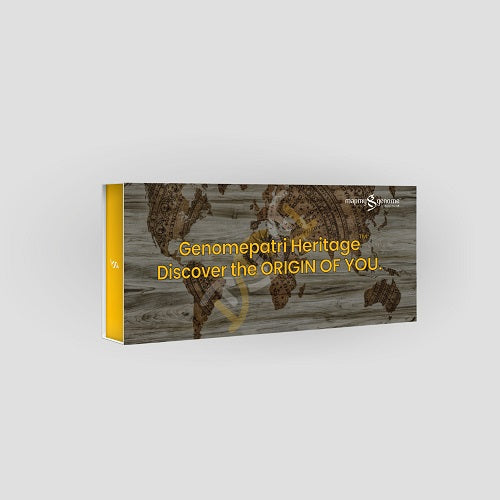
By utilizing Genomepatri Heritage, you look completely past superficial labels to discover the exact migratory tracks, ancestral percentages, and parental haplogroups your family actually carries.
Pairing this historical timeline with our flagship health panel, Genomepatri, gives you a complete, data-driven operational manual for your body. You can accurately evaluate your personalized baseline for metabolic conditions, identify your body‘s exact nutritional sensitivities, map your liver‘s compatibility with modern medications, and design a custom fitness and longevity routine built strictly for your actual DNA.
Ready to read the true history written in your cells? Order your Genomepatri Heritage kit today and unlock the ancient timeline written in your DNA.
Frequently Asked Questions (FAQs)
What does Genomepatri Heritage reveal about Knanaya ancestry?
Genomepatri Heritage analyzes thousands of genetic markers (SNPs) across your autosomal DNA to map your deep ancestral percentages. For individuals of Knanaya descent, the test precisely uncovers your unique ratio of West Asian/Mesopotamian ancestral tracks integrated with your deep South Asian ancestral layers, mapping your specific maternal and paternal haplogroups.
How does the Knanaya genome differ from other Syrian Christians (Nasranis) in Kerala?
While both communities share a profound historical connection to ancient Christian migrations and local peninsular baselines, the Knanaya possess a significantly more compact genetic structure. Due to nearly 1,700 years of strict internal endogamy and out-marriage exclusion rules, the Knanaya exhibit an elevated West Asian autosomal signature and much longer continuous Runs of Homozygosity (ROH) compared to broader Nasrani populations.
What are "Runs of Homozygosity" (ROH) and why are they vital for my health?
Runs of Homozygosity refer to long, continuous stretches of identical DNA segments inherited from both parents. When a community operates as a highly insular, closed endogamous pool for many generations, these tracks become highly concentrated. Mapping them via a genetic panel is essential for identifying unique metabolic behaviors and screening for rare inherited health variants.
Why should a Knanaya individual pair an ancestry test with a health panel?
Generations of marrying within a highly compact, closed social capsule cause certain metabolic behaviors, cardiovascular risks, and drug sensitivities to become highly concentrated within that specific gene pool. Pairing Genomepatri Heritage with a data-driven Genomepatri health panel allows you to catch potential inherited cardiovascular, lipid, or diabetic risks early and tailor your lifestyle to your exact biological profile.